

Pet Blogs
Setting Up Your 1st Aquarium: Essential Fish Tank Items for Beginners

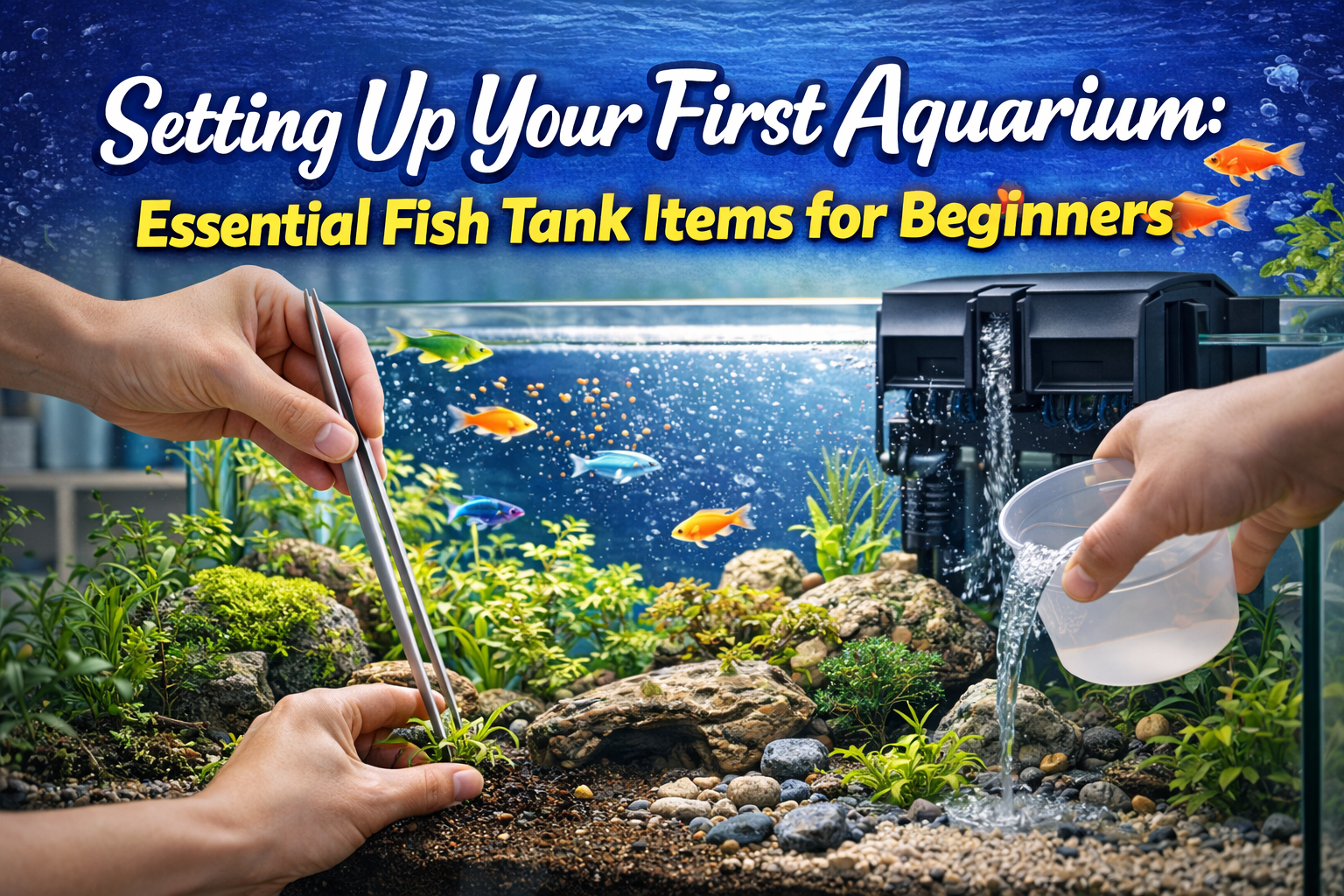
Starting your first aquarium is exciting, but a proper aquarium setup for beginners can feel confusing… when you see the long list of products available online. A beginner fish tank setup does not need to be complicated. The key is to focus on the right essentials from day one so your fish get a stable, healthy environment.
Most successful beginner aquariums are built around the same basics: the right tank size, reliable filtration, proper heating, water treatment, and a few simple maintenance tools. Aquarium setup guides from established pet and aquarium sites consistently recommend these core items because they help create a safer and easier first-time fishkeeping experience.
If you are wondering what fish tank items you actually need, this complete guide will help you build a practical aquarium setup checklist for beginners.
1. Choose the Right Aquarium Tank
The first step in any aquarium setup for beginners is selecting the tank itself. Many first-time fishkeepers assume a smaller tank is easier, but very small tanks are often harder to maintain because water conditions change quickly.
A medium-sized freshwater aquarium usually gives beginners more stability and more room for equipment. You should also make sure the tank is placed on a strong, level surface away from direct sunlight.
When selecting your tank, think about:
- the type of fish you want to keep
- how much space you have
- how easy the tank will be to clean
- whether you may upgrade later
A good beginner fish tank setup starts with choosing a tank that gives both you and your fish enough room.
2. Use a Reliable Aquarium Filter
A proper aquarium filter is one of the most important parts of any fish tank setup. Filters help remove waste, support beneficial bacteria, and keep the water cleaner for longer.
Most beginner aquarium checklists include filtration as a must-have because fish produce waste constantly, and leftover food can quickly affect water quality. Guidance from aquarium-focused sources also emphasizes that filters are essential because they support mechanical and biological filtration in a new tank.
Depending on your tank size, you may consider:
- internal filters
- hang-on-back filters
- sponge filters
- canister filters for larger aquariums
If you are planning a bigger aquarium, high-performance filtration becomes even more important for long-term stability.
3. Add an Aquarium Heater if Needed
If you are keeping tropical fish, an aquarium heater is another essential item. Many popular beginner fish species need stable warm water, and room temperature is often not enough.
A heater helps maintain a consistent environment, which reduces stress and supports fish health. Many beginner aquarium setup guides include a heater among the main essentials for freshwater tropical tanks.
Choose a heater based on your tank size, and always use a thermometer to monitor temperature properly.
4. Don’t Forget Water Conditioner
Tap water is not ready for fish straight from the faucet. It may contain chlorine or chloramine, which can harm fish and beneficial bacteria.
A water conditioner for aquarium use is essential because it makes tap water safer before adding it to the tank. This is one of the most overlooked items in a beginner aquarium setup checklist, but it is absolutely necessary.
Whenever you fill the tank or do a water change, treat the water first.
5. Use the Right Substrate
Substrate is the material placed at the bottom of the tank, such as gravel or sand. It adds visual appeal, supports beneficial bacteria, and helps create a more natural environment.
Your choice depends on the type of fish and whether you plan to keep live plants. Many beginner fish tank setups use gravel because it is easy to clean and works well for community aquariums.
Substrate may seem decorative, but it is still one of the essential fish tank items for beginners.
6. Install Proper Aquarium Lighting
A basic aquarium light helps you view your fish clearly and supports the overall appearance of the aquarium. If you plan to add live plants, lighting becomes even more important.
Good lighting also helps establish a healthy daily routine for fish. However, avoid keeping lights on for too long, since excessive light can encourage algae growth.
7. Add an Air Pump Only if Your Setup Needs It
Not every tank requires an air pump for aquarium use, but some setups benefit from additional aeration. Air pumps are often used with sponge filters, decorations, or tanks that need more surface movement.
This is not always mandatory, but it can be a useful part of a beginner aquarium setup depending on the filter and fish species you choose.
8. Use a Water Test Kit
A fish tank water test kit helps you monitor ammonia, nitrite, nitrate, and pH. This is especially important in a new aquarium because the tank needs time to build beneficial bacteria.
Multiple aquarium beginner guides stress the importance of cycling a tank before fully stocking it, since an uncycled aquarium can expose fish to toxic ammonia and nitrite.
Testing your water helps you understand what is happening inside the aquarium instead of guessing.
9. Learn About the Nitrogen Cycle
One of the most important beginner topics is the aquarium cycle. A new tank does not become fish-safe instantly. Beneficial bacteria must grow in the filter and substrate to process fish waste.
This process is often called:
- cycling a fish tank
- aquarium nitrogen cycle
- how to cycle an aquarium
Skipping this step is one of the biggest mistakes beginners make. Reliable fishkeeping guides consistently recommend cycling before adding a full stock of fish.
10. Keep Maintenance Tools Ready
A successful aquarium setup also needs a few simple cleaning tools:
- algae scraper
- gravel vacuum
- fish net
- bucket for water changes
- thermometer
These may seem small, but they make routine maintenance much easier.
11. Start with the Right Fish
After the tank is ready, choose beginner-friendly fish that match your setup. Avoid overstocking and do not add too many fish at once.
A stable tank with fewer fish is always better than a crowded tank with poor water quality.
Common Beginner Mistakes to Avoid
When setting up your first aquarium, avoid these common mistakes:
- choosing a tank that is too small
- skipping filtration
- not using a water conditioner
- adding fish too early
- overfeeding
- ignoring water testing
- buying incompatible fish species
Most aquarium problems start with setup mistakes, not with the fish themselves.
Final Thoughts
A good beginner aquarium is not about buying everything at once. It is about choosing the right essentials and setting them up correctly. If you focus on the basics — tank, aquarium filter, heater, substrate, lighting, conditioner, and water testing — your first fish tank setup will be much easier to manage.
For beginners, the best approach is simple: start slow, cycle the tank properly, and build a stable environment before adding more fish.
If you are looking for genuine aquarium products, filters, and fish tank care essentials, you can explore premium aquarium solutions at Petsheart.